
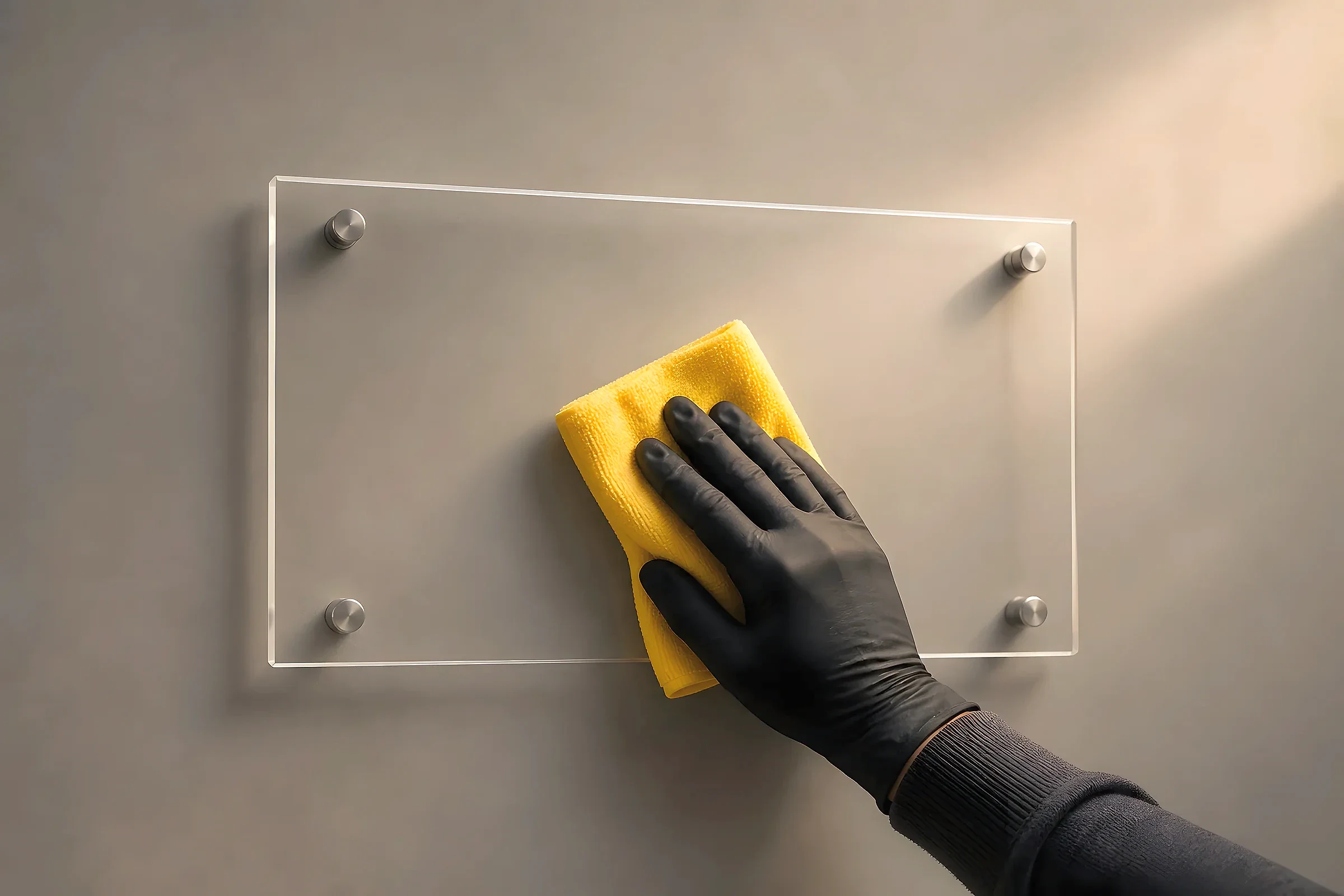
Gentle cleaning protects more than appearance
Dirt is not only cosmetic. Grit trapped under a cloth can scratch acrylic and gloss film. Traffic film left around an edge can hold contaminants against adhesive. Bird deposits, sap and industrial fallout may mark a surface if they remain in place. Regular, gentle cleaning prevents stubborn buildup and makes changes easier to spot.
The safest starting point for many sign faces and vehicle graphics is clean water, a mild detergent and a soft microfibre cloth or non-abrasive sponge. Loose grit should be rinsed away before the surface is wiped. Work from the cleaner upper area downwards and keep the cloth itself clean so it does not become the abrasive.
A product described as a powerful cleaner is not necessarily suitable. Strong solvents, abrasive powders and aggressive degreasers can dull acrylic, soften print, stain edges or attack adhesive. The material and finish should determine the cleaning method, and an inconspicuous test area is sensible when compatibility is uncertain.
Washing applied vehicle graphics
Hand washing gives the most control around panel edges, overlaps and fine cut lettering. Water should be comfortably cool or warm rather than extremely hot. A soft mitt can lift road film without the concentrated force of a stiff brush.
Pressure washing can damage graphics when the jet is too close, too forceful or aimed into an exposed edge. If it is used, the nozzle should be kept at a sensible distance and directed broadly across the surface, not driven against seams or lifted corners. Damaged areas need attention before washing because water pressure can turn a small opening into a larger one.
Automatic brushes may carry grit and repeatedly strike delicate details. Wax and polish products also need care. Some are designed for painted bodywork but can alter the sheen of matte or textured films, leaving glossy patches that cannot be blended back. A finish-specific product is safer than assuming one treatment suits every surface.
Spills and deposits are best removed promptly with a compatible method. Scraping with a hard blade risks both the film and the paint beneath it. Heat should not be improvised as a cleaning tool because local temperature can distort film or change the adhesive bond.
Cleaning acrylic and sign faces
Acrylic can look like glass while responding very differently to chemicals and abrasion. Dry wiping is a common source of fine scratches because dust is dragged across the face. Rinsing first and using a clean, soft cloth reduces that risk.
Ammonia-rich glass cleaners and strong solvents may haze, craze or weaken some plastics. Paper towels can also be rougher than they appear. Mild soapy water and microfibre are a more cautious default unless the material supplier specifies another method.
Dimensional letters and illuminated sign faces collect dirt around returns, joints and drainage points. Cleaning should not force water into electrical enclosures or sealed assemblies. Power should be isolated before any task that opens an illuminated sign; internal electrical work belongs with a competent technician rather than routine surface care.
Metal panels and frames may have painted, powder-coated or brushed finishes. Cleaning along the grain of a brushed surface and avoiding harsh pads helps preserve its texture. Runoff from one material can also mark another, so residues should be rinsed rather than allowed to dry on lower panels.
What routine inspection looks for
Inspection is easiest while the surface is clean. On vinyl, look for lifting at edges, shrinkage around recesses, cracks, bubbles, fading that differs between panels, and damage caused by impact or abrasion. A small edge failure can admit dirt and water, making a local repair more difficult if it is ignored.
On rigid signs, check that faces sit evenly and that trims, caps and visible fixings remain secure. Warping, cracks, corrosion staining or movement in wind all deserve attention. Drainage openings should remain clear where the sign design includes them. Illuminated signs should be observed for dark sections, flicker, uneven colour or moisture inside the face.
The supporting structure matters as much as the visible graphic. A clean face does not make a loose bracket safe. Inspection from ground level can identify obvious changes, but elevated, electrical or structural checks require suitable access and expertise.
Repair, replace or leave alone
Fresh adhesive film can sometimes be repaired locally when the surrounding material is stable and a matching finish is available. Widespread cracking, major colour change or repeated edge failure usually points to replacement rather than a growing patchwork. On a printed panel, replacing one section may reveal a visible difference from adjacent weathered sections.
Peeling a graphic without the right heat and technique can leave adhesive or damage weak paint. Removing sign faces or tightening structural fixings can create electrical and access risks. Routine care should stop where specialist removal, electrical isolation or work at height begins.
Consistent cleaning and simple observation extend the useful appearance of graphics and create an early warning when something changes. The aim is not to make a fitted product permanent; it is to avoid preventable damage and deal with faults while their scope is still clear.
Viking Signrite lists sign repairs, vinyl removal and replacement under Installation & Maintenance.