
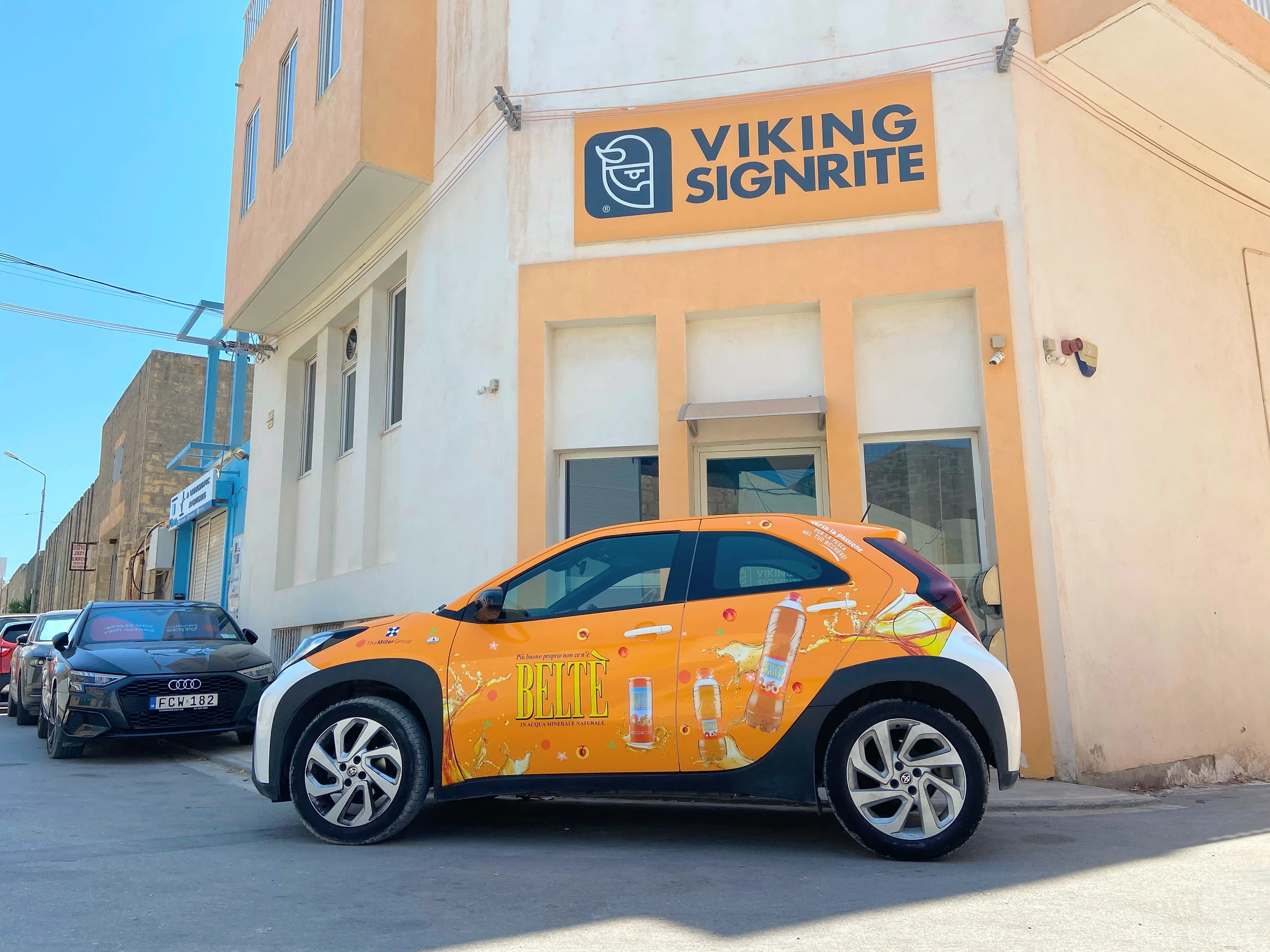
Two ways to use the same broad material family
A vehicle wrap and a cut-vinyl decal can both begin as self-adhesive film, but they solve different visual and practical problems. A wrap treats a large part of the body as one continuous graphic surface. Cut vinyl uses separate shapes, letters or marks applied only where they are needed.
The difference is not simply large versus small. Coverage changes the preparation, artwork, installation and eventual removal. A design that works as a compact door mark may feel lost when stretched across a full side panel. A photographic layout that flows around several panels cannot be reduced to a few isolated decals without changing the idea.
Understanding the distinction early keeps the design aligned with the vehicle rather than forcing a finished layout onto an unsuitable method.
What a full or partial wrap does
Wrapping film is applied across broad areas of painted bodywork. A full wrap covers most visible painted panels; a partial wrap covers selected areas and deliberately blends with the original vehicle colour. Printed film can carry gradients, textures and photographic imagery. Solid-colour film can change the apparent colour while keeping the surface visually simple.
Vehicle panels are not flat canvases. Film must pass over curves, recesses, edges and changes in plane. Conformable wrap film is made to handle more of that geometry than a basic sign vinyl, although the design and installation still need to respect severe channels and tight compound curves. The graphic is often divided into panels with planned overlaps so it can be positioned and fitted accurately.
A wrap offers the most control over the overall silhouette. It can connect the front, sides and rear into one composition, or use a strong block of colour to make otherwise separate graphics feel related. That coverage also means more painted area has to be inspected, cleaned and prepared before application.
What cut vinyl does
Cut-vinyl graphics are made by cutting shapes from coloured film and removing the unwanted material. Transfer tape holds the remaining pieces in position during application. The result has no printed background: the vehicle paint shows around and through the graphic.
This approach is well suited to crisp lettering, simple symbols, identification marks and repeated fleet information. Colour comes from the film itself, so flat shapes can remain clean and consistent without a printed edge. Separate colours may be layered or aligned, but very fine detail can become difficult to weed, transfer and maintain.
Cut graphics leave more of the original paint visible and can be replaced by element rather than by an entire printed panel. They also make the vehicle colour an active part of the design. A pale mark may read strongly on a dark body and disappear on a white one, so one artwork treatment will not always work across mixed vehicle colours.
Conformability is a material question
Not every self-adhesive vinyl is intended for the same surface. Flat and gently curved panels place modest demands on the film. Deep recesses, rivets and compound curves require a material and fitting method designed for that movement. Using more coverage does not automatically make a film more conformable.
The vehicle itself sets limits. Flexible bumpers, textured trim, rubber seals, damaged paint and areas exposed to heat may need to remain unwrapped or be treated as separate details. Panel gaps and door shuts also interrupt the image. Good artwork anticipates those breaks so an important feature is not split by a handle or lost inside a recess.
Removal and fleet consistency
Both methods are normally considered removable, but removal depends on the film, the condition of the paint, the length and conditions of exposure, and the technique used. Sound factory paint is a different substrate from a weak repair or flaking clear coat. A condition check before application matters because vinyl should not be treated as a repair for unstable paint.
For a fleet, cut vinyl can make repeated identifiers economical to update and straightforward to reproduce. A wrap can create stronger visual consistency when vehicles differ in base colour or when a campaign needs broad image coverage. Partial wraps often sit between the two: enough area to establish a shared visual block, with cut details carrying information that may change.
The best choice follows the artwork, body geometry, update pattern and desired coverage. Neither method is automatically the premium answer; each becomes effective when it is designed for the job it actually has to do.
Viking Signrite lists full wraps, fleet branding, graphics and decals under Vehicle Branding.